
Meditation for Sexual Performance Anxiety: How to Get Out of Your Head and Back Into Your Body

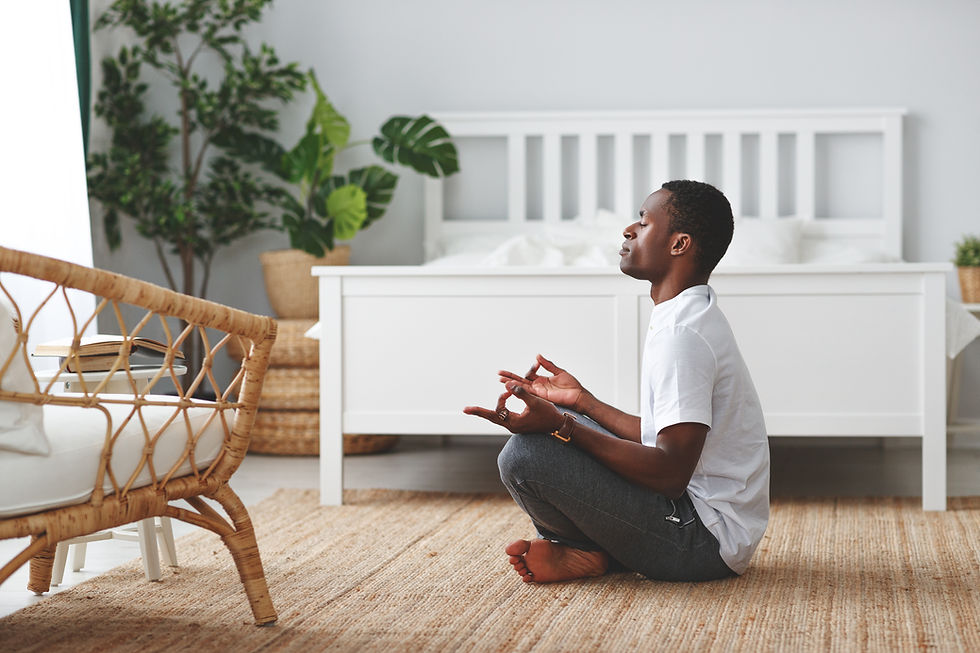
Sexual intimacy is one of those experiences where trying too hard can sometimes make things more difficult. The more you monitor whether your body is responding “correctly,” worry about satisfying your partner, or anticipate something going wrong, the harder it can become to actually experience pleasure and connection.
This is one reason meditation for sexual performance anxiety can be helpful. Mindfulness does not require you to force yourself to relax, eliminate every anxious thought, or convince yourself that everything will go perfectly. Instead, it can help you notice when your attention has shifted away from the present experience and into evaluation, worry, or self-criticism, and gently bring your attention back to what is happening in your body right now.
For someone experiencing sexual performance anxiety, that shift can be significant. Instead of mentally watching and judging yourself during sex, mindfulness can help you reconnect with physical sensations, emotional connection, pleasure, and curiosity.
Meditation is not a guaranteed solution for sexual difficulties, and persistent concerns may have physical, psychological, relational, or medication-related factors that deserve professional attention. But when anxiety is contributing to the problem, learning how to become more present can be a valuable part of addressing it.
What Sexual Performance Anxiety Actually Feels Like
Sexual performance anxiety is not limited to one gender or one specific sexual concern. It can involve anxiety about erections, orgasm, ejaculation, lubrication, desire, pain, appearance, pleasing a partner, initiating sex, or whether you are having sex “the right way.”
Often, the anxiety begins before anything sexual happens. You may anticipate intimacy and immediately start wondering whether the same problem will happen again. If you previously lost an erection, had difficulty reaching orgasm, experienced pain, or felt disconnected during sex, you may approach the next encounter already looking for signs that it is happening again.
During intimacy, that worry can become a running internal commentary. You might wonder whether your partner is enjoying themselves, whether you're taking too long, whether your body is responding normally, or whether your partner can tell that you're anxious. Instead of experiencing what is happening, you begin evaluating it.
Safe Space Counseling's Mindful Approaches to Easing Performance Anxiety in the Bedroom explores how mindfulness can help interrupt this cycle and create a more relaxed, present approach to sexual experiences.
Why Getting “In Your Head” Can Affect Sexual Experiences
Sexual arousal generally benefits from attention to sensation, connection, and pleasure. Performance anxiety pulls attention in another direction.
Instead of noticing your partner's touch, you may be thinking about whether you are aroused enough. Rather than noticing what feels good, you may be wondering how long you've been taking. Instead of communicating what you want, you may be trying to determine whether your partner is disappointed.
This type of self-monitoring can make sex begin to feel more like an evaluation than an experience.
The frustrating part is that the harder someone tries to prevent a sexual difficulty, the more attention they may give it. A person worried about maintaining an erection may repeatedly check whether their erection feels firm enough. Someone worried about orgasm may become increasingly aware of how long it is taking. Someone concerned about satisfying a partner may spend so much time analyzing their partner's reactions that they lose touch with their own experience.
An anxious thought can then become evidence that something is going wrong, which creates more anxiety and even more monitoring.
Mindfulness offers another option: noticing the thought without allowing it to become the center of the sexual experience.
How Meditation Can Help With Sexual Performance Anxiety
Meditation is sometimes misunderstood as learning how to empty your mind. That expectation can make people feel as though they are “bad” at meditation when thoughts inevitably appear.
Mindfulness is less about having no thoughts and more about changing your relationship with them.
Imagine that you are being intimate with your partner and the thought appears, “What if I can't stay aroused?”
Without mindfulness, you may immediately engage with that thought. You start checking your body, remembering the last time you struggled, predicting how your partner might react, and trying to force yourself to become more aroused.
With mindfulness, you might instead recognize, “There's the anxiety again,” and redirect your attention toward a neutral or pleasurable sensation in the present moment — your breathing, the warmth of your partner's skin, the feeling of being touched, or another sensation that feels comfortable.
The thought does not have to disappear before you can return to the experience.
That is one of the most useful principles of meditation for performance anxiety: you do not need to win an argument with your anxious thoughts. You can notice them and bring your attention somewhere else.
Start Practicing Mindfulness Outside the Bedroom
If the first time you attempt mindfulness is during a highly anxious sexual experience, it may feel difficult. Practicing outside intimate situations can make the skill more familiar.
You do not need a lengthy meditation routine. Even five minutes of intentionally noticing your breath can help you practice recognizing when your mind wanders and bringing your attention back without criticizing yourself.
Sit somewhere comfortable and notice your natural breathing. When thoughts arise, about work, your plans for the day, something you forgot to do, notice that your attention has wandered. Then gently return to the physical sensation of breathing.
That simple process is the practice.
The goal is not to remain perfectly focused for five minutes. Each time you notice that your mind has wandered and return to the present, you are practicing the same attentional shift that can eventually be used when performance anxiety appears during intimacy.
Try Breath Work Before Intimacy
When you already associate sex with anxiety, your nervous system may begin reacting before intimacy starts. You might notice tension, shallow breathing, a racing heart, or a sense that you need to make something happen.
Taking a few minutes to slow down beforehand can help you notice that activation rather than carrying it directly into the experience.
Try breathing naturally while making your exhale slightly longer than your inhale. Rather than thinking, “I need this breathing exercise to make my anxiety go away,” pay attention to the sensations involved. Notice your chest or abdomen moving, the air entering your nose, and the feeling of your body settling into the surface underneath you.
If your mind starts predicting what will happen during sex, acknowledge the thought and return to your breathing.
The purpose is not to guarantee sexual performance. In fact, making relaxation another requirement can recreate the same problem. The goal is simply to create a few minutes in which you practice being with your body rather than evaluating it.
Use Grounding When Your Mind Starts Racing
Grounding can be particularly useful when you notice yourself mentally leaving the experience and becoming consumed by worry.
Rather than trying to think your way out of anxiety, deliberately notice sensory information around you. You might focus on the feeling of the sheets underneath your body, your partner's hand against your skin, the temperature of the room, the sound of your breathing, or the sensation of your feet or legs against the bed.
Choose sensations that feel neutral, pleasant, or safe.
Grounding can help shift attention away from questions such as “Am I doing okay?” and toward information your body is receiving in the present moment.
This does not mean ignoring discomfort. If something hurts, feels emotionally unsafe, or you no longer want to continue, mindfulness should never be used to override that information. Being present also means recognizing and respecting your boundaries.
Practice a Body Scan Without Judging What You Find
A body scan is another meditation practice that can be adapted for sexual performance anxiety.
Outside of intimacy, lie or sit comfortably and gradually move your attention through different parts of your body. Notice your feet, legs, abdomen, chest, shoulders, hands, neck, and face. You are not trying to make each area relax. Simply notice what is there.
Maybe your shoulders feel tight. Your stomach may feel tense. Your hands might feel warm. One area may feel completely neutral.
The important part is practicing observation without immediately turning sensation into judgment.
This can be especially valuable for someone who has developed a habit of constantly evaluating sexual responses. During intimacy, noticing sensation often becomes immediately attached to meaning: “I'm not aroused enough,” “I'm losing my erection,” or “I should be feeling more.”
A body scan teaches a different skill: notice first without immediately evaluating.
Over time, that practice may make it easier to experience physical sensations during intimacy without constantly grading your body's response.
Present-Moment Awareness During Intimacy
Mindfulness during sex does not require stopping everything to formally meditate. It can be woven into intimacy itself.
Choose one sensation and give it your attention for several moments. Notice warmth, pressure, movement, breathing, or touch. If your attention shifts toward performance, acknowledge it and return to sensation.
You may have to do this repeatedly.
That does not mean mindfulness isn't working. Returning is the practice.
It can also help to expand your definition of what deserves attention. Instead of focusing exclusively on genitals, erection, orgasm, or another area associated with “performance,” notice sensations throughout the body. This can reduce the feeling that one physical response determines whether the entire experience is successful.
Safe Space Counseling's The Impact of Stress on Sexual Desire: Being Intimate in Times of Turmoil also discusses how stress can affect desire and intimacy, which can be important when performance concerns are occurring alongside broader life stress.
Stop Making Orgasm or Performance the Measure of Successful Sex
Mindfulness becomes much harder when there is a finish line you believe you must reach.
If the definition of successful sex is maintaining an erection, having an orgasm, making your partner orgasm, lasting a particular amount of time, or experiencing a certain level of desire, every moment can become evidence of whether you are succeeding or failing.
That creates an enormous amount of pressure.
A more mindful approach allows intimacy to be exploratory rather than goal-oriented. You can notice what feels good, communicate, slow down, change activities, laugh, pause, or decide that something isn't working without treating the experience as a failure.
This doesn't mean sexual concerns don't matter. If you are distressed about erectile difficulties, orgasm concerns, pain, low desire, or another issue, those concerns deserve attention. But turning every sexual encounter into a test can make anxiety more powerful.
What to Do When an Anxious Thought Keeps Coming Back
Some thoughts are persistent. You may redirect your attention and find the same worry returning seconds later.
Trying to suppress it usually isn't helpful. Telling yourself, “Don't think about losing my erection,” keeps your attention focused on exactly that possibility.
Instead, try naming what is happening in a neutral way: “I'm noticing that I'm worried about my erection,” or “My mind is checking whether I'm taking too long.”
Then return to sensation.
This creates a little distance between having a thought and treating the thought as a fact or emergency.
You can also communicate with your partner. Sexual anxiety often becomes more intense when someone feels responsible for hiding it. A trusted partner may be able to slow down, remove pressure, or simply reassure you that intimacy does not need to follow a predetermined script.
Meditation Isn't About Forcing Your Body to Cooperate
There is an important trap to avoid when using meditation for sexual performance anxiety: turning mindfulness into another performance technique.
If you think, “I did ten minutes of meditation, so now I should be able to perform,” you have simply created another test.
Mindfulness cannot guarantee an erection, orgasm, desire, or any particular sexual response. Bodies vary from day to day, and sexual functioning can be influenced by stress, sleep, medications, hormones, health conditions, relationship dynamics, alcohol or substance use, and many other factors.
Meditation is useful because it can help reduce the constant mental monitoring that sometimes intensifies anxiety. It is not a way to command your body to respond on demand.
If sexual difficulties are new, persistent, painful, or otherwise concerning, it is also important to discuss them with an appropriate medical professional so that potential physical contributors are not overlooked.
When Mindfulness Alone Isn't Enough
Performance anxiety can sometimes become a self-reinforcing pattern that is difficult to change alone. You may understand exactly what is happening and still find yourself becoming anxious every time intimacy begins.
Therapy can help explore what is underneath the anxiety.
For one person, it may involve a previous experience with erectile difficulty that created anticipatory fear. For another, it may be connected to body image, shame, cultural or religious messages about sexuality, relationship conflict, trauma, perfectionism, or fear of disappointing a partner.
Cognitive Behavioral Therapy can also be useful for identifying thought patterns that contribute to sexual anxiety and developing different ways of responding to them. Safe Space Counseling's Mindful Approaches to Easing Performance Anxiety in the Bedroom provides additional strategies for understanding the connection between thoughts, anxiety, and sexual experiences.
For concerns specifically affecting intimacy, sex therapy at Safe Space Counseling provides a confidential, nonjudgmental setting to address sexual performance anxiety and other concerns related to sexuality, desire, intimacy, and relationships.
Getting Out of Your Head Doesn't Mean Never Feeling Anxious
The goal of mindfulness is not to reach a point where an anxious thought never appears during sex again. Trying to achieve that can become another form of performance pressure.
Instead, the goal is to become better at noticing when your mind has shifted into monitoring and judgment and finding your way back to the experience in front of you.
You might still notice the thought, “What if this doesn't work?” The difference is that you do not necessarily have to spend the next ten minutes following it.
You can notice your breathing. You can feel your partner's touch. You can communicate. You can slow down. You can decide what feels good rather than what you believe is supposed to happen.
That shift from performing intimacy to experiencing intimacy can be an important part of reducing sexual performance anxiety.
Get Support for Sexual Performance Anxiety at Safe Space Counseling
If anxiety is making it difficult to relax, stay present, enjoy intimacy, or trust your body's responses, you do not have to keep trying to solve it by yourself. Sexual performance anxiety is a real concern, and therapy can provide space to understand the thoughts, experiences, relationship dynamics, or emotional patterns contributing to it.
At Safe Space Counseling, sex therapy provides a supportive and nonjudgmental environment to talk openly about concerns that can be difficult or embarrassing to discuss elsewhere. Therapy can help you work on performance anxiety, sexual communication, intimacy, desire, and the emotional factors that may be keeping you stuck in your head during sex.
Mindfulness can give you tools for returning to the present moment. Therapy can help you understand why it has become so difficult to stay there.
Contact Safe Space Counseling to schedule a consultation and learn more about sex therapy for sexual performance anxiety.
save to Pinterest


Comments